PHP Isn't Dead, You Just Stopped Paying Attention
Originally published October 2025. Updated March 2026.
Every so often someone publishes a "PHP is dead" article, even though PHP continues to power a massive chunk of the web. PHP 8.3 and 8.4 brought enums, fibers, typed class constants, property hooks, and other features that developers in other ecosystems take for granted, quietly arriving without fanfare.
The thing is, PHP doesn't need hype. It needs to work. And it does. It powers WordPress, Laravel, Symfony, and thousands of internal tools at companies that will never write a blog post about their stack. The developers writing those "PHP is dead" pieces are usually writing them on a platform that runs on PHP.
Don't take my word for it. According to W3Techs, here's what server-side language usage looks like right now:
| Language | Oct 2025 | Mar 2026 |
|---|---|---|
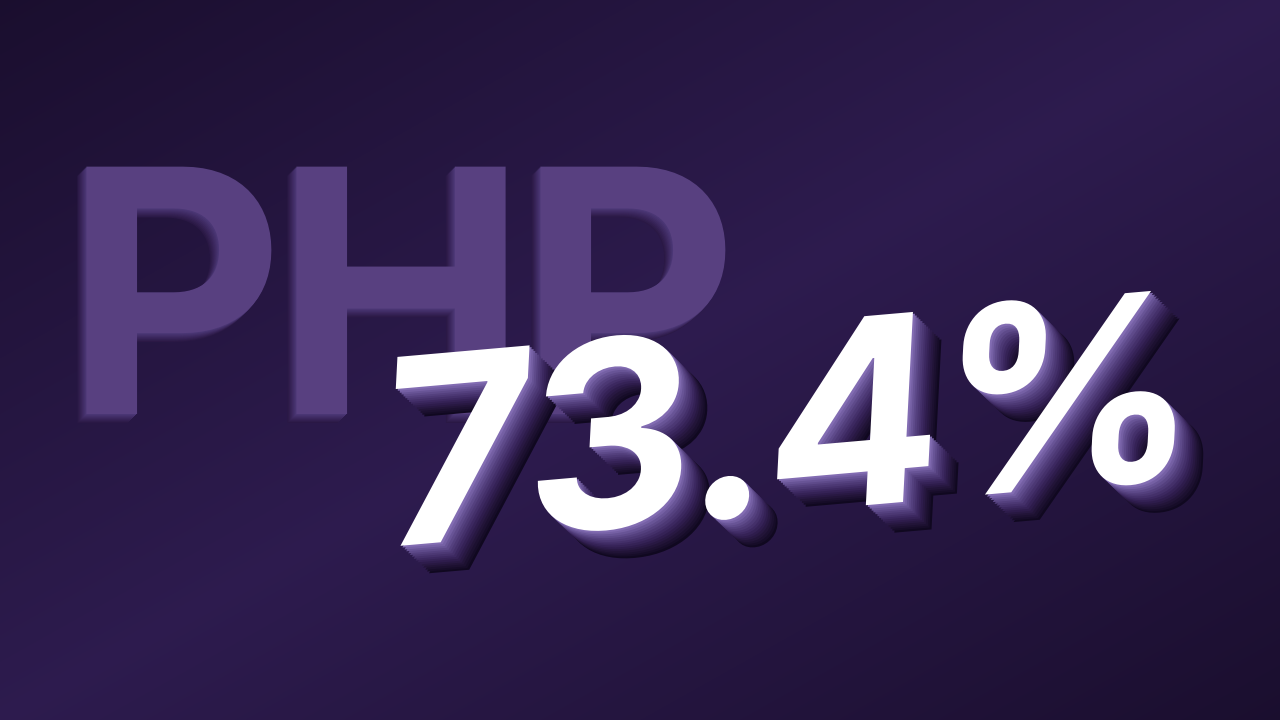
| PHP | 73.4% | 71.8% |
| Ruby | 6.4% | 6.7% |
| JavaScript | 5.0% | 5.9% |
| Java | 5.3% | 5.4% |
| Scala | 4.7% | 5.0% |
| ASP.NET | 4.8% | 4.4% |
| Python | 1.2% | 1.2% |
PHP powers nearly three-quarters of all websites that use a server-side language. The next closest competitor is Ruby at under 7%. That's not a language clinging to relevance, that's a language so dominant the chart looks broken.
I've been writing PHP professionally for most of my career, and the language today is almost unrecognizable compared to what it was ten years ago. Modern PHP is fast, type-safe when you want it to be, and pragmatic in a way that prioritizes getting things done over ideological purity. That's not a weakness. That's a feature.
Update, March 2026: Five months later, the story is the same. PHP dipped about 1.6 points while JavaScript gained roughly a point — but PHP still commands more than the next five languages combined. The "PHP is dead" crowd will point to the decline. I'd point to the fact that nothing else is even close.